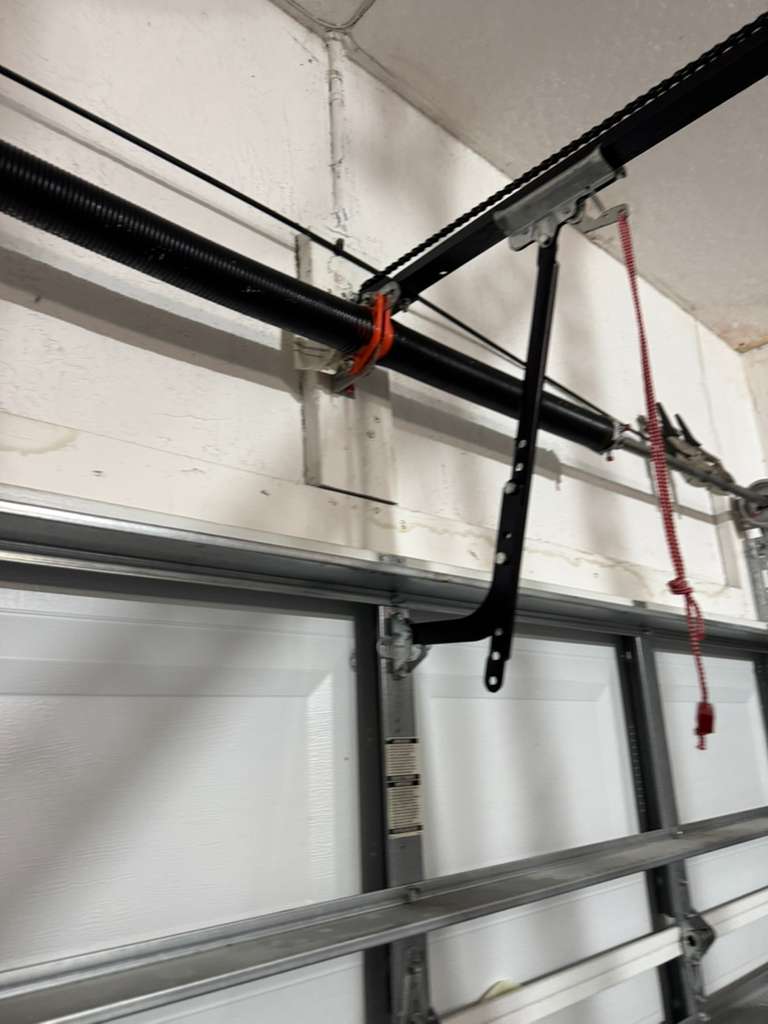
How to spot a garage door spring about to fail: why it’s dangerous to fix yourself, and what a real spring replacement involves.
A few summers ago I got a call from a guy in Plantation who’d heard a loud bang from his garage — like a gunshot, he said. He thought someone had broken in. It was actually his torsion spring letting go. No one was in the garage when it happened, thank God, because a spring failing under full tension can send metal flying hard enough to dent a car or worse. That bang is one of the most common “first sign” stories I hear, and it’s exactly why I take springs more seriously than almost any other part of the door.
Signs your spring is on its way out
- The door feels unusually heavy when you lift it manually, or the opener strains to move it.
- You notice a visible gap or separation in the coil of the spring above the door.
- The door opens unevenly, with one side higher than the other.
- A loud bang from the garage, even if the door still seems to work afterward.
- The door has started closing faster than normal, or slamming.
- The spring looks rusty or corroded. This one gets overlooked constantly, and here in South Florida, with our humidity, it’s one of the biggest tells we see. Rust weakens the metal from the inside long before you’ll notice the door acting any different. My honest advice: if you can see rust on your spring, don’t wait for it to snap — get it swapped out on your schedule, not on the spring’s schedule.
Why I never recommend DIY on this one
I’ll be blunt: this is the one repair on our whole website I actively discourage people from attempting themselves, even handy homeowners. A standard torsion spring holds an enormous amount of tension — the tools to safely wind and unwind it (winding bars, the right clamps) aren’t things most people have lying around, and YouTube videos rarely show you what happens when it goes wrong. I’ve patched up more than one well-meaning DIYer over the years. It’s just not worth it when a professional replacement takes us under an hour.
How we actually handle it
When we come out for a spring job, we don’t just replace the one that broke. Springs are rated for a certain number of cycles, and if one has failed from age, the other is usually close behind — so on most jobs, we replace both to save you a second service call down the line. We also always check the cables and rollers at the same time, since a failing spring puts extra strain on the whole system.
That’s just standard practice for us, not an upsell — it’s what I’d want done on my own house.
My honest advice after years of these calls: if you hear that bang, or notice the door getting harder to lift, don’t wait and don’t try to fix it yourself. Keep the door closed, keep your car out if you can, and call someone. It’s a fast, affordable fix when it’s done right — and one of the few repairs where trying to save money yourself can genuinely cost you a trip to the hospital.
A word on safety, licensing & warranty
Springs are the single most dangerous part of a garage door to work on — this is not a project for a homeowner, no matter how handy you are. Never attempt to loosen, tighten, or remove a spring yourself, and keep everyone clear of the garage if you suspect one has failed. USA Garage Door INC is a licensed and insured company, and every spring we install comes with a warranty covering both the part and our workmanship, so you’re protected long after the job is done.